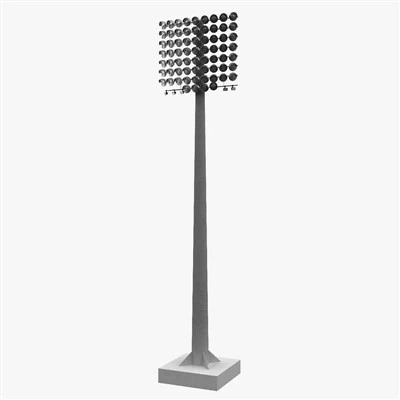
What are the Quality Standards for Square Poles?
As a seasoned supplier of square poles, I understand the importance of adhering to strict quality standards. Square poles are widely used in various applications, including street lighting, power distribution, and signage. Ensuring their quality is not only crucial for the safety and functionality of these installations but also for the reputation of suppliers like us. In this blog post, I will delve into the key quality standards for square poles.
Material Quality
The first and foremost aspect of square pole quality is the material used in their construction. Most square poles are made from steel, which offers excellent strength and durability. However, not all steel is created equal. High - quality square poles are typically made from low - carbon steel, which has a good balance of strength and ductility.
The steel should be free from defects such as cracks, porosity, and inclusions. These defects can significantly weaken the pole and make it more prone to failure under stress. To ensure the quality of the steel, we source our materials from reputable steel mills that have strict quality control measures in place. Regular inspections and testing are carried out on the incoming steel to verify its quality.
Galvanization is another important factor related to material quality. Galvanization is a process of coating the steel with zinc to protect it from corrosion. A proper galvanized coating should have a uniform thickness and be firmly adhered to the steel surface. For outdoor applications, such as Galvanized Steel Light Pole, the galvanized layer plays a vital role in ensuring the long - term durability of the pole. According to industry standards, the minimum thickness of the galvanized coating for square poles should be in line with international specifications, usually around 85 microns for poles exposed to normal environmental conditions.


Dimensional Accuracy
Dimensional accuracy is a critical quality standard for square poles. The dimensions of the pole, including its length, width, and wall thickness, should be within the specified tolerance limits. For example, in the case of 20 Feet Street Light Pole or 9 Meter Street Light Pole, even a slight deviation in length can lead to installation problems.
The cross - section of the square pole should be truly square, with right - angle corners and straight sides. Any out - of - square condition can result in uneven stress distribution when the pole is installed and loaded. Additionally, the wall thickness should be consistent throughout the length of the pole. A significant variation in wall thickness can cause weak points in the pole, reducing its overall strength.
To ensure dimensional accuracy, we use advanced manufacturing equipment and precision measuring tools. Each pole is carefully measured at multiple stages of the production process, from raw material cutting to the final finish. Automated quality control systems are also employed to detect any dimensional deviations in real - time.
Structural Integrity
Square poles need to have high structural integrity to withstand various loads. They are typically subjected to wind loads, self - weight, and the weight of attached equipment such as lights, signs, or antennas. The structural design of the pole should be based on engineering calculations and relevant design codes.
The pole should be able to resist bending, torsion, and axial loads without excessive deformation or failure. For example, in areas with high wind speeds, the pole needs to be designed with a sufficient safety factor to prevent it from toppling over. The connections between different parts of the pole, such as joints and base plates, should be strong and reliable. Welded joints, which are commonly used in pole construction, need to be of high quality. The welds should have sufficient penetration, be free from cracks and slag inclusions, and have proper weld bead profiles.
Non - destructive testing methods, such as ultrasonic testing and magnetic particle testing, are used to detect any internal defects in the welds and the pole body. This helps to ensure the long - term structural integrity of the square poles.
Surface Finish
A good surface finish is not only aesthetically pleasing but also has practical implications for the pole's durability. The surface of the square pole should be smooth, free from burrs, rough edges, and any visible damage. A smooth surface reduces the risk of corrosion by preventing the accumulation of dirt, moisture, and other corrosive substances.
In addition to galvanization, some square poles may also receive additional surface treatments, such as painting. The paint should be of high quality and have good adhesion to the galvanized surface. It should provide an additional layer of protection against UV radiation, which can cause the galvanized layer to deteriorate over time. The color of the paint should be uniform, and there should be no signs of peeling, cracking, or chipping.
Compliance with Standards and Regulations
Quality square poles must comply with relevant national and international standards and regulations. For example, in the United States, poles are often required to meet standards set by the American National Standards Institute (ANSI) and the Institute of Electrical and Electronics Engineers (IEEE). These standards cover various aspects of pole design, manufacturing, and installation.
In addition to technical standards, square poles may also need to comply with environmental regulations. For example, the materials used in the pole and its surface treatments should not contain harmful substances such as lead or mercury. We ensure that all our square poles are fully compliant with the latest standards and regulations, which gives our customers peace of mind when using our products.
Customization and Special Requirements
In addition to meeting general quality standards, our company also offers customization services to meet the special requirements of our customers. Some customers may need square poles with specific dimensions, load - bearing capacities, or surface finishes. We have a team of experienced engineers and technicians who can work closely with customers to design and manufacture poles that meet their exact needs.
Whether it is a small - scale project or a large - scale infrastructure development, we are committed to providing high - quality square poles that are tailored to the specific requirements of the project. Our focus on customization ensures that our customers can find the most suitable pole solutions for their applications.
If you are in the market for high - quality square poles, whether it is for street lighting, power distribution, or other applications, we invite you to reach out to us for a detailed discussion. Our team of experts is ready to assist you in selecting the right square poles for your project and can provide you with competitive pricing and reliable delivery. Contact us today to start the procurement process and let us help you build a better and safer infrastructure.
References
- ANSI Standards for Steel Poles
- IEEE Guidelines on Pole Design and Installation
- Galvanizers Association Technical Manuals
- ASTM Standards for Steel Materials and Coatings