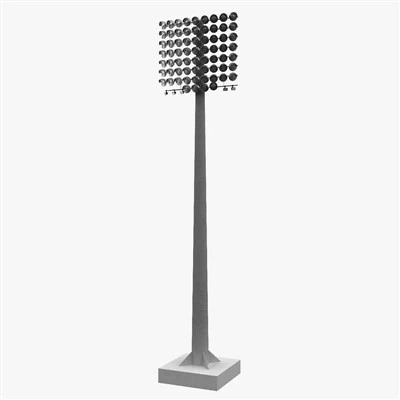
As a supplier of Electric Street Lights, I've witnessed firsthand the evolution of street lighting technology. For many years, mercury vapor electric street lights have been a common sight in urban and rural areas alike. However, as technology has advanced, it has become clear that these traditional lights come with a number of significant disadvantages. In this blog post, I'll explore some of the drawbacks of using mercury vapor electric street lights and explain why switching to more modern alternatives, such as LED street lights, is a smart choice.
Environmental Impact
One of the most significant disadvantages of mercury vapor electric street lights is their environmental impact. Mercury is a highly toxic heavy metal that can have serious health effects on humans and wildlife. When mercury vapor lights are disposed of, the mercury they contain can leach into the soil and water, contaminating the environment and posing a risk to human health.
In addition to the environmental impact of mercury disposal, mercury vapor lights also contribute to light pollution. These lights emit a broad spectrum of light, including ultraviolet (UV) and infrared (IR) radiation, which can disrupt the natural rhythms of wildlife and interfere with astronomical observations. Light pollution can also have negative effects on human health, including sleep disturbances and increased risk of certain cancers.
Energy Efficiency
Another major drawback of mercury vapor electric street lights is their energy efficiency. These lights are relatively inefficient, converting only a small percentage of the electrical energy they consume into visible light. As a result, they require more energy to produce the same amount of light as more modern lighting technologies, such as LED street lights.
LED street lights, on the other hand, are highly energy-efficient, converting up to 80% of the electrical energy they consume into visible light. This means that they require significantly less energy to produce the same amount of light as mercury vapor lights, resulting in lower energy costs and reduced carbon emissions.
Lifespan and Maintenance
Mercury vapor electric street lights have a relatively short lifespan compared to LED street lights. On average, mercury vapor lights last between 16,000 and 24,000 hours, while LED street lights can last up to 100,000 hours or more. This means that mercury vapor lights need to be replaced more frequently, resulting in higher maintenance costs and more disruption to traffic and pedestrians.
In addition to their shorter lifespan, mercury vapor lights also require more maintenance than LED street lights. These lights need to be regularly cleaned and inspected to ensure that they are operating properly, and the mercury they contain needs to be disposed of safely. LED street lights, on the other hand, require very little maintenance and can operate for years without needing to be replaced.
Color Rendering
Mercury vapor electric street lights have a poor color rendering index (CRI), which means that they do not accurately reproduce colors. This can make it difficult for people to see clearly at night, especially in areas where color recognition is important, such as intersections and crosswalks.


LED street lights, on the other hand, have a high CRI, which means that they can accurately reproduce colors and provide better visibility at night. This can improve safety for pedestrians and drivers, as well as make it easier for people to navigate their surroundings.
Cost
While the initial cost of mercury vapor electric street lights may be lower than that of LED street lights, the long-term cost of using these lights is significantly higher. As mentioned earlier, mercury vapor lights have a shorter lifespan and require more maintenance than LED street lights, which means that they need to be replaced more frequently and cost more to operate over time.
In addition to the higher maintenance and operating costs, mercury vapor lights also have a higher energy cost than LED street lights. This is because they are less energy-efficient and require more energy to produce the same amount of light. As a result, switching to LED street lights can result in significant cost savings over the long term.
Conclusion
In conclusion, while mercury vapor electric street lights have been a common sight in urban and rural areas for many years, they come with a number of significant disadvantages. These lights have a negative environmental impact, are energy inefficient, have a short lifespan, require more maintenance, have a poor color rendering index, and are more expensive to operate over the long term.
As a supplier of Eletric Street Light, I strongly recommend switching to more modern lighting technologies, such as LED street lights. LED street lights are highly energy-efficient, have a long lifespan, require very little maintenance, have a high color rendering index, and are more cost-effective over the long term.
If you're interested in learning more about LED street lights or would like to discuss your lighting needs, please don't hesitate to contact us. We would be happy to provide you with more information and help you find the right lighting solution for your project.
References
- "Mercury Vapor Lamps." U.S. Environmental Protection Agency. Accessed [Date].
- "LED Street Lighting: Benefits and Considerations." Department of Energy. Accessed [Date].
- "Light Pollution and Its Effects on Wildlife and Humans." National Geographic. Accessed [Date].