

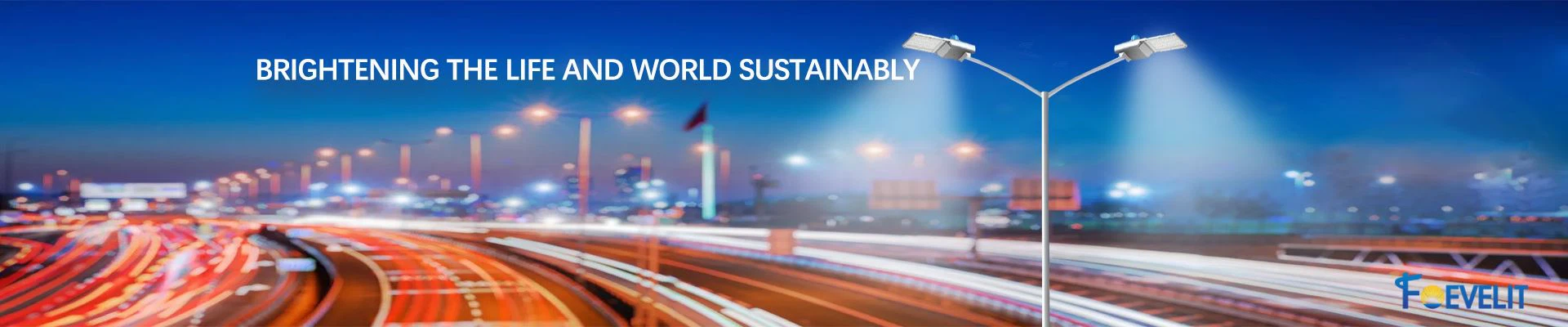
As an important part of urban infrastructure, neighborhood street lighting plays a crucial role in residents' quality of life and sense of security. However, there are a series of problems and challenges in the practical application of neighborhood street lighting. In this paper, we will analyze the current situation of community street lighting and propose optimization solutions, with a view to providing useful information and suggestions for relevant practitioners and users.
Analysis of the current situation of community street lights
1.1 Function and significance of street lights in small districts
As an important part of urban lighting facilities, street lights in small districts can not only provide night lighting and enhance the residents' sense of security, but also beautify the environment and improve the living experience.
1.2 Problems of street lights in small districts
(1) High energy consumption: traditional neighborhood street lights mostly use high-pressure sodium lamps or fluorescent lamps, which have high energy consumption and do not meet the requirements of energy conservation and environmental protection.
(2) High maintenance costs: the maintenance of traditional street lights requires manual inspection, high maintenance costs, and there is a risk of delay and leakage.
(3) Poor lighting effect: the lighting effect of traditional street lights is limited by the design and layout of lamps, and there are problems such as uneven lighting and light pollution.
Optimization scheme of street light in small area
2.1 Adoption of LED street lights
LED street light has the advantages of energy saving, long life, high brightness, etc., and gradually become the first choice of street light in the district.The application of LED street light can greatly reduce energy consumption, reduce maintenance cost, and provide better lighting effect.
2.2 Intelligent management system
Through the intelligent management system, it can realize the remote monitoring, fault alarm and timed dimming of community street lights. This can improve the management efficiency of street lights, reduce the workload of manual inspection and lower maintenance costs.
2.3 Application of light control technology
Light control technology can automatically adjust the brightness of street lights according to the changes in light intensity, realizing intelligent lighting. This not only saves energy, but also reduces the impact of light pollution on residents' lives.
2.4 Optimization of street light layout and design
Reasonable street light layout and design can improve the lighting effect and reduce blind spots and shadows. At the same time, the use of solar streetlights, wind streetlights and other new green energy streetlights can also be considered to further reduce energy consumption.
The future development trend of small area street light
3.1 Intellectualization and automation
With the development of the Internet of Things and artificial intelligence technology, community street lights will tend to be intelligent and automated. The future of community street lights will be able to automatically adjust the brightness and color according to the flow of people, weather and other factors, to provide more personalized lighting services.
3.2 Application of green energy
In order to further reduce energy consumption and environmental pollution, community street lights will gradually use solar energy, wind energy and other green energy. This will help realize the sustainable development of community street lights.
As an important part of urban lighting, community street lights need to be continuously optimized and improved. Through the use of LED street lights, intelligent management systems, light control technology and other measures, the energy efficiency and lighting effect of community street lights can be improved and maintenance costs can be reduced. In the future, community street lights will develop in the direction of intelligence and greening to provide residents with better lighting services.


